For most households, choosing a water heater comes down to comfort — how hot, how fast, how strong the flow. But there's a more fundamental question that deserves equal attention: is it safe?
An instant shower water heater sits at the intersection of water and electricity, operating inches from your body every single day, which makes safety engineering one of the most important — and least visible — things to evaluate before buying.
A well-designed unit shouldn't just heat water reliably; it should actively protect the people using it, every time, without anyone in the household having to think about it. Understanding water heater safety features properly, rather than taking a brand's word for it, is the difference between a genuine safety upgrade and a marketing checkbox.
Preventing Electrical Risks with RCCB Protection
One of the most important safety questions to ask before buying any electric water heater is whether it includes RCCB protection. A Residual Current Circuit Breaker continuously monitors the electrical current flowing through the unit, and if it detects an abnormal leakage — even a small one — it cuts the power automatically before it becomes dangerous.
This is the feature most directly responsible for preventing electric shock in a wet environment, and it's non-negotiable in a well-engineered heater. In practice, any water heater with RCCB and DPDT protection as standard already covers the two most critical electrical risk categories before you even get to the rest of the spec sheet.
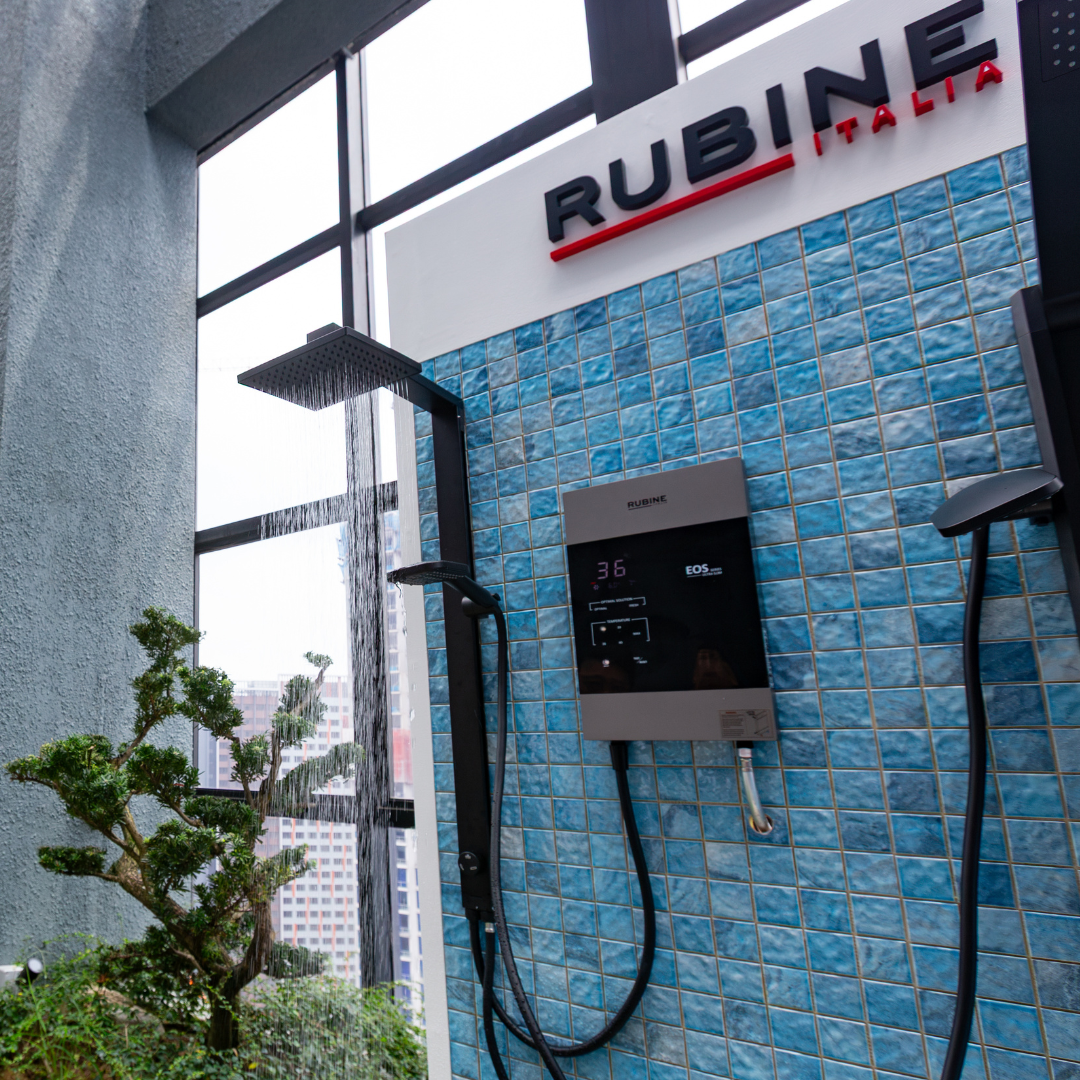
RUBINE's EOS Series is built around RCCB protection as standard (the modern equivalent of what older installations may still refer to as an ELCB), giving households a continuous, automatic layer of protection that doesn't rely on anyone noticing a fault before it's too late.
Double Protection Against Overheating
Electrical leakage isn't the only risk worth guarding against — overheating is another. This is where DPDT (Double Pole Double Throw) protection comes in, providing an additional layer of thermal monitoring on top of standard temperature control.
In practical terms, DPDT protection acts as a backup system: if the primary heating control were ever to malfunction and allow temperatures to climb beyond a safe range, this secondary mechanism intervenes independently. It's the kind of redundancy that's easy to overlook when comparing water heaters on spec sheets, but it's precisely the sort of overheating protection water heater engineering that matters most in the rare moment something does go wrong.
Dual Valve Technology: Preventing Sudden Scalding
Anyone who has stepped into a shower expecting warm water and been caught by an unexpected blast of heat understands this risk firsthand. It typically happens because residual heated water sitting inside the unit's tank is released suddenly when the shower is switched on, before the system has had a chance to regulate to a safe, consistent temperature.
RUBINE's EOS Series addresses this directly through Dual Valve technology, which manages this residual water more carefully so that the temperature you get is the temperature you expect from the first second, not a spike followed by a correction.
For households with young children or elderly members — the two groups most vulnerable to scalding injuries — this is one of the more meaningful safety features to look for, even though it rarely gets the attention that headline power figures do. It's what qualifies the EOS Series as a genuine anti scald water heater, and specifically the kind of anti-scald water heater Malaysia families increasingly ask for by name rather than by feature list.
Splash-Proof Casing and Certified Components
Beyond the internal electronics, physical build quality matters too. The EOS Series carries an IP25 rating, meaning the casing is protected against limited water spray and dust ingress — an important consideration given that a shower water heater, by definition, operates in a consistently damp environment.
The heating element itself is UL-approved, a certification that reflects independent testing against recognised international safety standards, rather than a manufacturer's own assurance. Together, these two elements address the physical side of safety: keeping water out of places it shouldn't be, and ensuring the component doing the actual heating has been rigorously vetted.
Multiple Layers, Working Together
No single safety feature does all the work on its own — the real protection comes from having several systems operating together. Alongside RCCB and DPDT protection, the EOS Series includes Dual Valve scald prevention, IP25-rated casing, a smart auto safety check, an auto water flow switch, and a real-time error indicator — multiple layers working together rather than any single feature carrying the load.
This layered approach reflects a simple principle: safety shouldn't depend on any one component functioning perfectly at all times. If one layer is compromised, another is still there.
Peace of Mind, Every Single Day
None of these features are things you'll see or think about during a normal shower — and that's exactly the point. Good safety engineering is invisible in daily use and only becomes noticeable in the moment it's needed.
For families choosing a water heater for daily use, that invisible layer of protection is arguably more important than any single performance figure, because it's what turns a functional appliance into a genuinely safe shower heater — one you can trust without a second thought.
.jpeg)
.jpeg)